


When most people hear “domestic violence,” they picture something they can see, a bruise, a broken door, a 911 call at two in the morning but they completely leave Coercive Control out of the context.
I have watched clients come into my office looking perfectly fine on the outside while quietly drowning on the inside. No visible injuries, no police reports, and yet every single decision in their lives had been made, or unmade, by someone else.
That is the reality of Coercive Control, and California’s family courts are only just beginning to take it as seriously as the science demands.
What Coercive Control Actually Looks Like
Coercive control is not a single act. It is a sustained campaign, a pattern of behavior designed not to hurt once, but to keep the other person in a permanent state of fear, dependency, and self-doubt.
The California legislature formally recognized that behaviors like financial deprivation, isolation from friends and family, gaslighting, and psychological manipulation can justify a Domestic Violence Restraining Order (DVRO) even when no physical contact has occurred.

What this means in practice is that courts must now look at the whole picture rather than evaluate isolated incidents. A judge who only sees a text message argument or a heated exchange in a parking lot is not seeing the case.
The case is the pattern, the slow, methodical dismantling of another person’s autonomy, carried out across months or years in ways that are often invisible to outsiders.
Financial deprivation is one of the clearest examples. An abuser does not need to hit someone to trap them. Controlling bank accounts, sabotaging employment, draining joint savings before a separation, or simply making a partner financially dependent enough that leaving feels impossible, these are forms of violence with real consequences. The victim is just as stuck as if there were a locked door.
Isolation works similarly. It rarely begins with a dramatic ultimatum. It starts with small criticisms of friends, subtle jealousy around family, and gradually escalates until the victim’s support network has quietly evaporated.
By the time they realize they have nowhere to turn, turning anywhere has been made to feel shameful or dangerous.
Gaslighting deserves its own section in any honest discussion of this topic. The word has been overused to the point of dilution in popular culture, but in its clinical form, the deliberate and persistent distortion of another person’s perception of reality, it can be psychologically devastating.
When the Courtroom Becomes the Weapon of Coercive Control
One of the most corrosive, and least discussed, aspects of modern coercive control cases is what happens after the abused partner physically leaves. Many people assume that once there is physical separation, the danger recedes.
In high-conflict family law cases involving coercive control, the opposite is frequently true. The legal system becomes the next arena.
Litigation abuse is the deliberate use of court proceedings to extend the control, harassment, and financial punishment of a former partner.

Every filing forces the protective parent, often struggling financially after years of financial deprivation, to pay attorney’s fees, take time off work, and live in a state of chronic legal anxiety.
The damage is not just financial. Litigation abuse is psychologically exhausting in a way that is difficult to communicate to someone who has not lived through it.
Every new motion reactivates the trauma. Every court date is a fresh confrontation. And the truly insidious part is that the legal system, by design, treats every filing as legitimate until proven otherwise.
The training gap among family court professionals makes this worse. Without specific education in coercive control dynamics, a judge or evaluator may look at a case involving dozens of motions, competing accusations, and high-volume legal activity and simply conclude that these are two difficult people who cannot get along.
That framing, “high conflict”, obscures what is actually happening and gives the abuser exactly the cover they need.
Competent legal advocacy in these cases requires naming what is happening explicitly and demonstrating, through documentation and pattern analysis, that one party’s behavior constitutes a continuation of the original abuse by other means.
What the Science Says About Children in Coercive Control Households
The urgency of getting this right is not theoretical. The Adverse Childhood Experiences (ACE) Study, conducted through the Centers for Disease Control and Prevention, is among the most cited bodies of research in child welfare, and its findings are sobering.
The research demonstrates clearly that the most significant harm to children living in abusive households comes not only from physical injuries but from “toxic stress”.
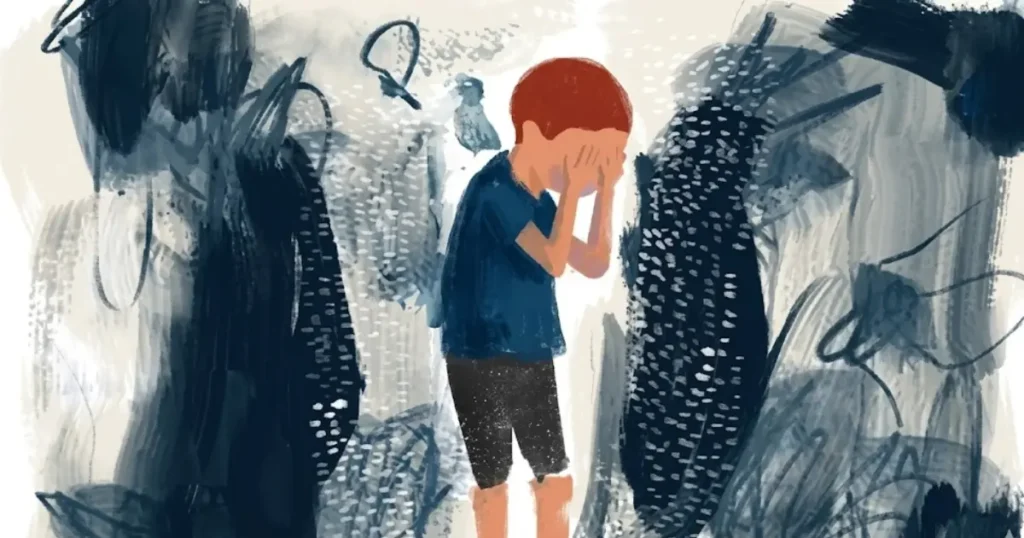
Children who are exposed to chronic fear and unpredictability in the home face significantly elevated risks across virtually every domain of health and wellbeing, including anxiety, depression, substance abuse, and cardiovascular disease later in life.
The more ACE categories a child is exposed to, the steeper the risk curve. And critically, the research ties sustained toxic stress exposure to life expectancy reductions of up to two decades in the most severe cases.
These findings have direct and profound implications for how family courts should approach custody decisions in cases involving coercive control.
Default arrangements that prioritize shared parenting time, often pursued in the name of fairness or the abstraction of “the child’s relationship with both parents”, can be actively harmful when one of those parents has been using fear and control as management strategies in the household.
A child’s need to be free from terror is not a secondary consideration in custody determinations. Under California law, it is explicitly primary. Health, safety, and welfare of the child is the governing standard, not symmetrical parenting time.